posted December 12, 2017 #
Aside from being a great album title,
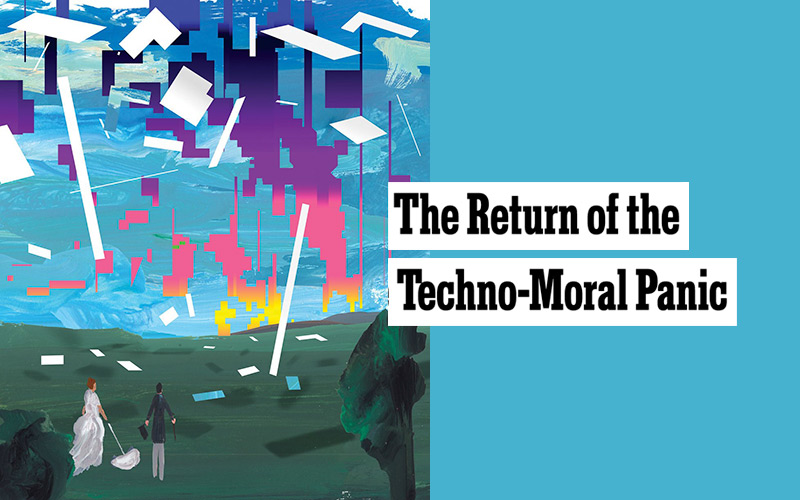
The Return of the Techno-Moral Panic is a great NY Magazine piece from John Herrman on our modern day fears of technology, specifically The Internet. These fears are not new and signal a continuing cycle of apprehension and trepidation towards the changing world around us. However, the article does a great job on explaining how this current climate is a
bit different than our hesitations of the 1990's Internet. Here's a long quote from the piece that struck me:
The internet of the 1990s was a perfect canvas for alarmism: hard to define, easy to misunderstand, growing rapidly but not yet vital or even familiar to those most inclined to worry about it. But the internet of 2017 is fundamentally different: both a dominant medium and a medium dominated by a few companies. Earlier worries about the reliability of information online - anyone can publish anything! - addressed the emergence of an entire new category of networked communication, evoking anti-populist fears about the spread of television, radio and the printed word; today's concerns about, for example, state-sponsored disinformation double as criticism of the companies that have annexed our networks: primarily Facebook, Google and Twitter.
The flip side of these companies' new dominance is that, not unlike the first industrialists, they turn progress from something that manifests inevitably with the passage of time into something that is being done to us, for reasons that are out of our control but seem unnervingly and suddenly within someone else's. This is a profound reorientation, which might explain why current anxieties about the internet make for such unlikely bedfellows. Conservative parents with moral complaints about inappropriate videos surfacing in YouTube kids' channels find themselves inadvertently agreeing with leftist critiques of corporate power. Facebook's inability to deal in any meaningful way with misinformation on the platform has loosely aligned an elitist critique of democratized news with populist anger at a company led by Silicon Valley elites. There are right-wing anti-monopolists and left-wing anti-monopolists setting their sights on Google and Facebook, claiming dangerous censorship or lack of responsible moderation or, sometimes, both at once - people who want different things, and who have incompatible goals, but who have intuited the same core premise. In these instances, the only people left telling us not to worry - rhyming their responses with the vindicated defenders of the nascent internet - have suspiciously much to lose.
It's a long read and probably best not immersed in first thing in the morning, your brain cells should all be firing to fully consume its message. I found myself disagreeing with the apprehensions described as I read through the first half but certainly came around towards the end, sharing a concern that our current landscape seems to be happening
to us and we need to find a way to wrangle it into a more beneficial place.