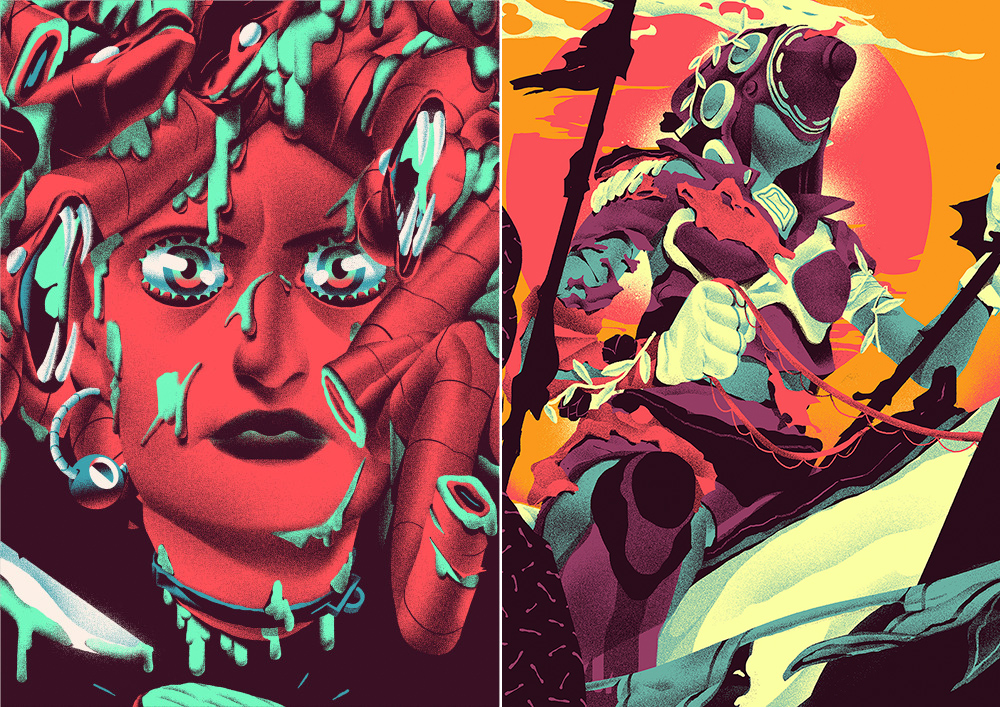
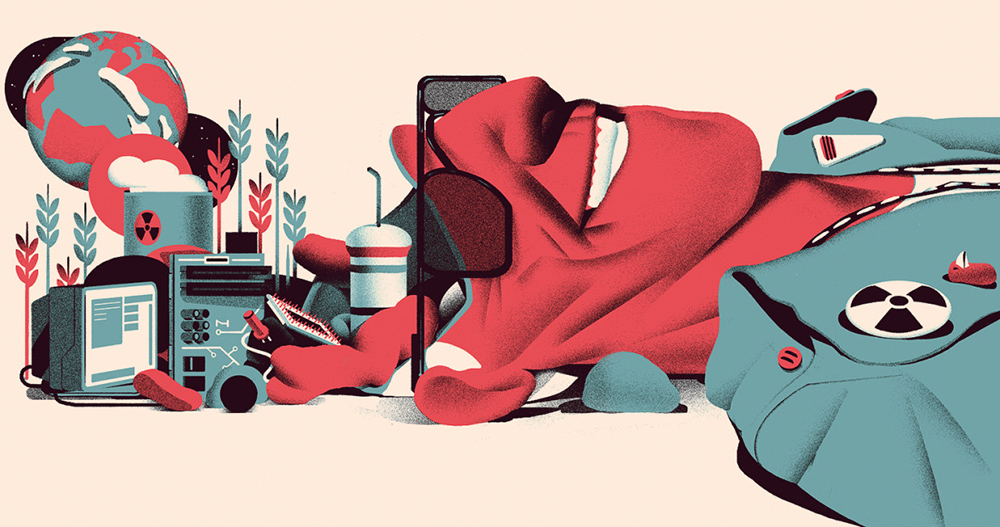
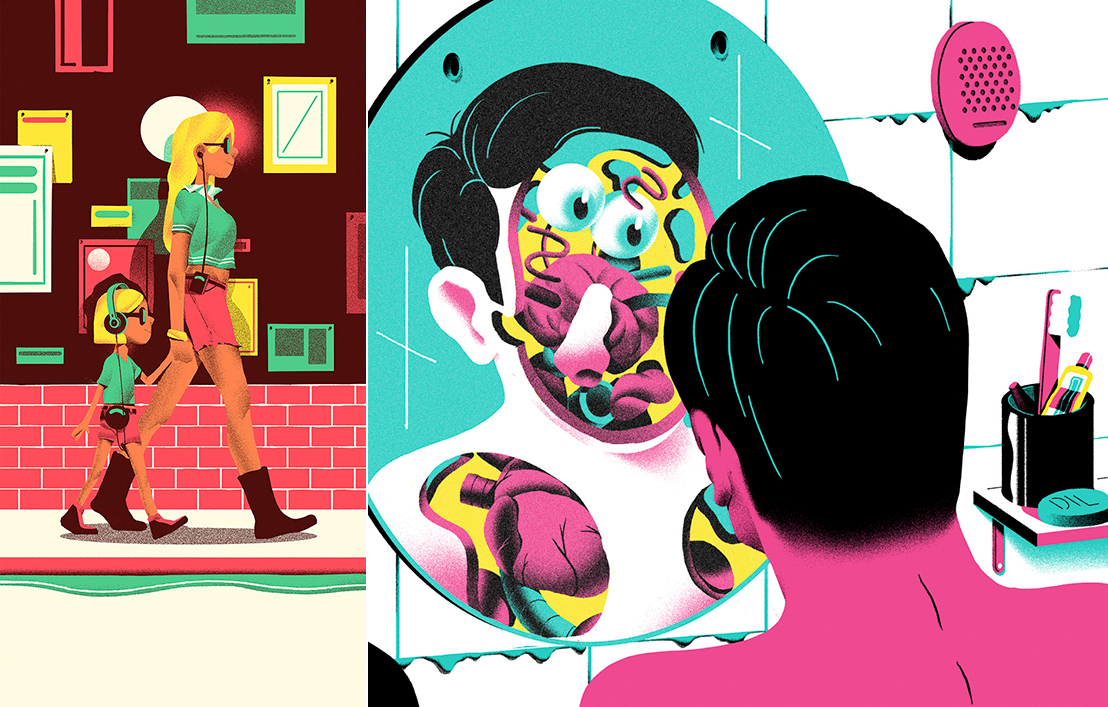
I can't say enough effusive things about the work of French illustrator Nicolas Dehghani. The expressive characters, the color palette, the textures - every single thing is absolutely compelling to my eyeballs. I particularly love that it can be cartoony, hardcore sci-fi or simply weird and it all still works great.
Plenty of newer work to see on Instagram and a treasure trove on Tumblr.
I'm sure I'll have some more elaborate posts about the Year in yk Records as the end of the year closes in but I wanted to take a moment to point out two articles that were particularly worthwhile:
Seen Comin'... is exquisite psychedelic pop overflowing with vivid imagery and lush arrangements. Seriously, everyone should have written about this record.
Alex the Great - a lengthy interview with Alex Caress, aka Little Bandit, on the impact and reception of his debut album, Breakfast Alone.
First, some background: Super NT is a console that recreates the Super Nintendo experience, not via emulation but with the same hardware originally available; souped up to 1080p. It's "video game preservation" - a SNES console for purists that also want their games to look good on the big screen. Honestly, it's an admirable endeavor and it looks great.
For me, the real story is that Phil Fish, designer of Fez and controversial tweeter, was involved in the Super NT's interface, including the boot sequence that depicts the Analogue logo in 30 random pixel variations set to a Squarepusher ident. You can read more about it here, as well as see a bunch of the variations on the embedded sequence above.
Couple this news along with the Fez Mobile news and maybe 2018 will be a full-on Fish Resurgence.
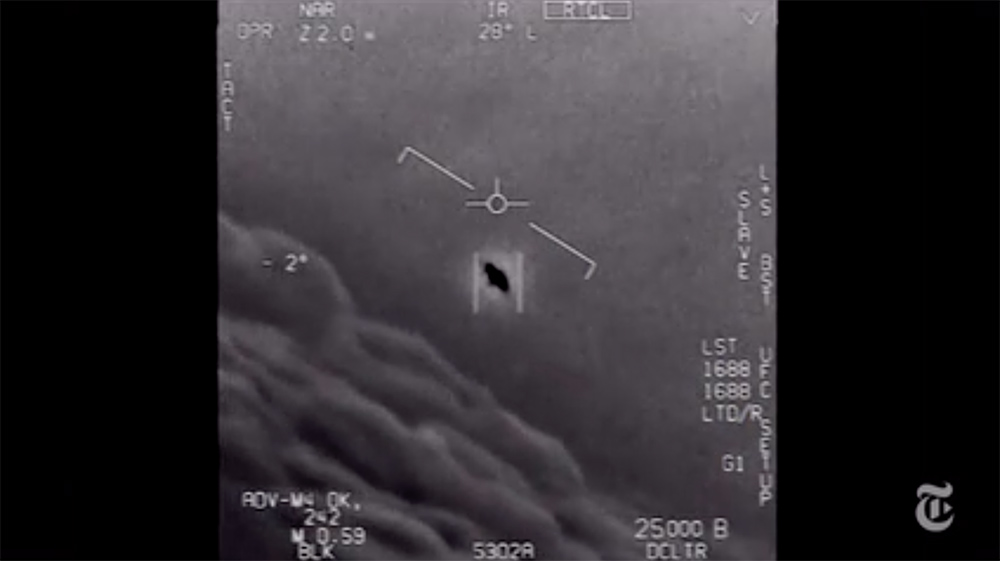
The NY Times recently reported on The Pentagon's Mysterious UFO Program - the Advanced Aerospace Threat Identification Program - a 2007 initiative that has been confirmed to have received a decent chunk of funding to investigate unknown objects in the sky. The funding, $600 billion, "dried up" in 2012 and not too many details are known about what work was actually done in those five years.
Sra Seager, an MIT astrophysicist, cautions against reading too much into it:
"When people claim to observe truly unusual phenomena, sometimes it’s worth investigating seriously," she said. But, she added, "what people sometimes don’t get about science is that we often have phenomena that remain unexplained."
That's entirely fair and agreeable but the US government rarely acknowledges anything to do with UFOs - alien or otherwise - so it's vaguely refreshing to hear this talked about a bit more openly.
It's a good read and, hopefully, just the first of many pieces to discuss the work and findings of Bigelow Aerospace, the company contracted to research the data. Here's my favorite quote from Mr. Bigelow himself:
"Internationally, we are the most backward country in the world on this issue. Our scientists are scared of being ostracized, and our media is scared of the stigma. China and Russia are much more open and work on this with huge organizations within their countries. Smaller countries like Belgium, France, England and South American countries like Chile are more open, too. They are proactive and willing to discuss this topic, rather than being held back by a juvenile taboo."
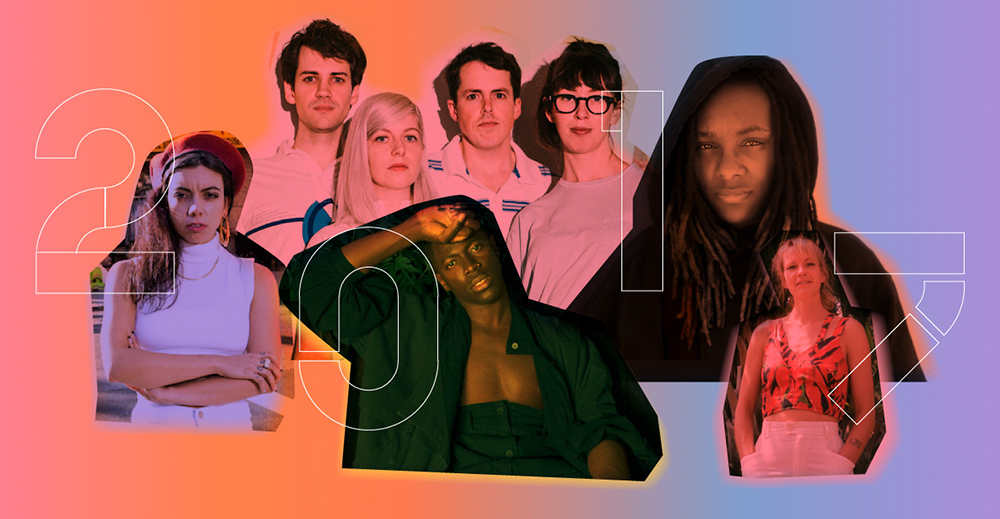
There is no shortage of "Best Of" coverage this time of year; much of it quite predictable and a little boring to read. That being said, the Bandcamp Countdown of the Top 100 albums of the year has been really fascinating; largely because of the diversity of albums and (mostly) unknown artists in the lists. The list is broken up into groups of twenty so you can start at the beginning, or dive into the top 20 or just peek in the middle. There's no bad place to start. I'm currently enjoying Business of Dreams, #21 on their list and an artist that's entirely new to me.
They've also got a nice Year in Photos rundown and their regular coverage on various music scenes. Bandcamp has always been a favored destination to me but their coverage of late has really pushed them into a new echelon of appreciation.
If you're a fan of Machinarium (or Samarost), you really should partake in the recently launched Gorogoa, a hand-drawn puzzle game from Jason Roberts and Annapurna Interactive. As you can see from the trailer, it's a not done as a platform puzzler or really anything you may be familiar with. It's a fresh, beautiful, take on gameplay and quiet interaction.
I've been quite enjoying it and love that it's not an iOS exclusive, you can also get it on Steam, Switch and Gog.com.
Might be a bit premature but I think Annapurna Interactive is one to watch.
I’ve been in Houston for an hour: had a margarita on an empty stomach, got this Porg doll I named after the founder of a weight loss church & checked into a La Quinta that aggressively smells like a COOKIE. ? https://t.co/G3VdzBcaJl
In case you don’t remember, here’s how the XFL is different from regular football:
- The “ball” is a grocery bag full of used heroin needles
- Every player must be a cast member from Boondock Saints 1 or 2
- 50% of all hotdogs sold in the stadium contain a lethal dose of cyanide
Funny or Die did a wrap-up on Best Gifs of 2017, certainly worth a gander if you're looking for a distraction. This is so good if you haven't seen it before. Surprised Giphy didn't do this but there's still time left in the year.
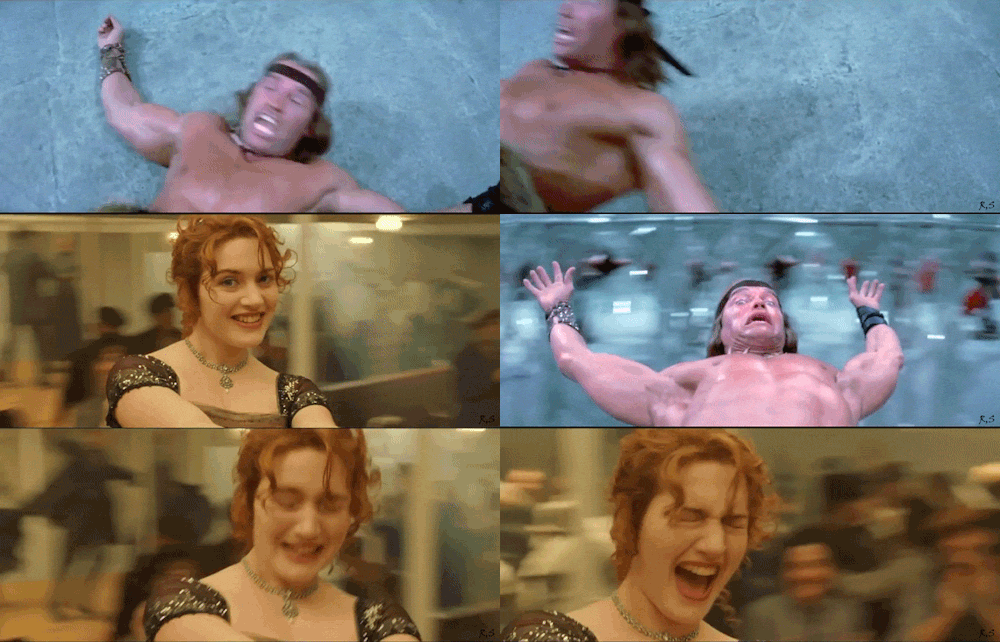
More importantly, this dump of Combined GIFs is making my week.
Seagulls (Stop It Now) - new Star Wars out today but let us not forget the brightest gem in the ever-growing pile of Star Wars content.
This is the water, this is the well - I find myself mentally revisiting The Woodsmen from Twin Peaks: The Return and stumbled on this perfect mash-up.
The End Is the Beginning Is The End - I had completely wiped the memory of this video from my mind. Everyone craps on this Batman movie but this video really takes the cake for me.
Not to go off on a tangent here but I also suggest reading the Wikipedia entry for the song Eye in which it is noted that " Billy Corgan's music publisher suggested he collaborate with basketball superstar and rapper Shaquille O'Neal, who had begun work on You Can't Stop the Reign." That's a b-side I hope surfaces one day.
Jake Tapper vs Ted Crockett - talking heads news arguments are frustratingly boring but anytime a news anchor simply states facts and shuts down the idiot on the other side, it's a pleasant view. See also: this extended pause version.
Have a great weekend! The end of the year approaches and I'm probably going to slow down on the posting so I can focus on wrapping up some projects that launch next year. Don't worry, I'll leave you with plenty to watch and enjoy.